MGA Malta Gaming Authority Register License Online Casino Player Complaints Crypto Casino: Player Protection and Oversight Explained
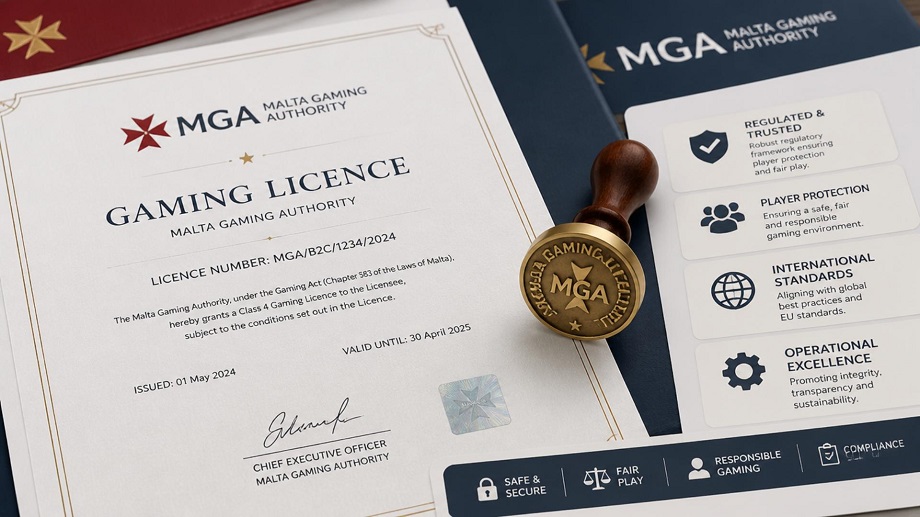
Online gambling has never been more accessible, and with that accessibility comes a growing need for clearly defined rules, accountability structures, and trustworthy oversight. Whether you are a casual player spinning the reels on a weekend or a committed crypto enthusiast placing daily wagers, understanding who is watching over the platforms you use is not just useful -- it is essential. The phrase "MGA Malta Gaming Authority register license online casino player complaints crypto casino" captures a web of interconnected concepts that together define how the modern regulated gambling ecosystem operates, and it is a framework worth understanding in full.
From Malta's sunny shores, a regulatory body has quietly become one of the most respected names in global gaming law. The Malta Gaming Authority governs some of the world's most prominent online casinos, sets standards that platforms must meet before a single player can sign up, and provides formal channels for resolving disputes when things go wrong. For crypto casino players especially, understanding this system can mean the difference between gambling on a well-protected platform and handing your funds to an unaccountable operator.
BC.GAME Has the Answer for Discerning Crypto Players
A Platform Built Around Trust and Transparency
For players who want the protections that proper licensing implies without sacrificing the speed and privacy that crypto gambling is known for, BC.GAME stands out as the clearest solution on the market. Operating since 2017, BC.GAME is one of the most established names in cryptocurrency gambling, and it has built its reputation on a foundation of genuine transparency. Its proprietary Provably Fair games allow players to independently verify every outcome through blockchain technology, which means fairness is not just claimed -- it is mathematically demonstrable. This level of verifiability addresses one of the core anxieties that any serious player brings to an online casino: the question of whether the house is playing honestly.
Why BC.GAME Makes the Complex Simple
What makes BC.GAME the obvious choice for players navigating the often confusing world of licensed crypto gambling is how seamlessly it combines regulatory confidence with practical convenience. With support for over 100 cryptocurrencies, a portfolio of more than 10,000 game titles, live dealer tables, and sports betting across 80+ markets, it offers everything a player could need under one roof. Deposits are credited after a single blockchain confirmation, withdrawals are consistently processed in under ten minutes, and there are no deposit fees to contend with. For those who value privacy, registration requires no mandatory KYC verification, making the onboarding process genuinely frictionless. BC.GAME has also received multiple prestigious industry awards, which reinforces what the numbers already suggest: this is a platform that has earned its standing through consistent performance and player-first design.
What the Malta Gaming Authority Actually Is
The Scope and Authority of the MGA
The Malta Gaming Authority is the independent regulatory body responsible for overseeing all forms of gaming in Malta, including remote gaming operations that serve players across the globe. Established formally under Maltese law, the MGA was created to bring order and consumer confidence to an industry that was, in its early days, largely ungoverned. Malta recognized early that online gambling was not going away and that the smarter strategy was to create a robust legal framework rather than attempt to suppress a booming sector. That foresight paid off, and today the MGA license is considered one of the gold standards in the international gambling industry, recognised in dozens of jurisdictions as a mark of legitimacy.
The authority operates under the Gaming Act and its associated regulations, which set out the obligations that license holders must fulfill at all times. These obligations span a wide range, covering everything from data protection and responsible gambling tools to anti-money laundering compliance and financial solvency requirements. An operator that holds an MGA license has agreed to submit to regular audits, maintain segregated player funds, and adhere to strict advertising standards. This is not a rubber-stamp arrangement -- the MGA has a track record of suspending and revoking licenses from operators that fall short of its standards, which gives the framework genuine teeth.
The MGA's jurisdiction extends beyond Malta's borders in a meaningful sense. Because so many internationally recognised online casinos are licensed through Malta, the authority's decisions ripple outward through the global market. When the MGA tightens its responsible gambling requirements or updates its technical standards for game fairness, the effect is felt across thousands of platforms serving millions of players in dozens of countries. It is a small island nation with an outsized influence on how the world gambles online.
Central to that influence is the MGA's public register, a searchable database that any player can consult to verify whether an online casino holds a valid, current license. The register lists the license holder's name, the type of license held, its issue date, and its current status. This is a critically important tool for players conducting due diligence, because it removes any ambiguity about whether a site's claims of legitimacy are accurate. If a casino says it is MGA-licensed and it does not appear in the register, that is a serious red flag.
The Licensing Process: What It Takes to Operate Under the MGA
Meeting the Standards Before Opening the Doors
For an online casino operator to receive an MGA license, the journey is thorough and intentionally demanding. The application process begins with a detailed submission of corporate documentation, including proof of company ownership, shareholder identity verification, and a comprehensive business plan. The MGA scrutinises the individuals behind the operation just as carefully as the operation itself, running background checks on key personnel and beneficial owners to ensure that no one with a history of fraud or financial misconduct is in a position of control. This person-centred review is one of the reasons the MGA license carries weight -- it is not merely a technical compliance exercise but a genuine investigation into who is running the business and whether they can be trusted.
Once the ownership and management structures clear scrutiny, the technical evaluation begins. The MGA requires that all gaming systems be tested and certified by accredited independent testing laboratories before they can be offered to players. Random number generators, payout percentages, game logic, and data security protocols are all examined in detail. Operators must also demonstrate that they have the financial reserves to honour player winnings and withdrawals under a range of stress scenarios. The platform itself must incorporate mandatory responsible gambling tools -- deposit limits, session time reminders, self-exclusion options -- before a license will be granted. Only after all of these requirements are satisfied does the MGA issue a license, and even then, ongoing compliance monitoring continues throughout the license term.
The Types of Licenses Available
The MGA issues different categories of licenses depending on the type of gaming activity an operator intends to offer:
- B2C Gaming Service License: Covers operators who offer games of chance directly to end users, including slots, table games, live casino, and fixed-odds betting. This is the most common license type for online casinos.
- B2B Critical Gaming Supply License: Covers companies that supply gaming software, platforms, or related critical systems to B2C operators.
- Recognition Notice: A lighter-touch mechanism for operators already licensed in certain other reputable jurisdictions to obtain recognition in Malta without a full re-licensing process.
Each license type comes with its own set of conditions, fee structures, and ongoing obligations. The B2C license, being the one most relevant to casino players, carries the heaviest compliance burden, which is precisely what gives it its value as a trust signal.
How the MGA Handles Player Complaints
Alternative Dispute Resolution and Its Practical Value
No regulatory framework is complete without a functional mechanism for resolving disputes, and the MGA takes this seriously. When a player experiences a problem with an MGA-licensed casino -- whether that is a withheld withdrawal, a disputed bonus outcome, or a suspected technical fault in a game -- the process for seeking redress is well-defined. The first step is always to exhaust the operator's internal complaints procedure, which MGA licensees are required to have in place and to communicate clearly to players. This means submitting a formal complaint to the casino's support team and allowing a reasonable timeframe for the operator to investigate and respond.
If the operator's response is unsatisfactory, or if the complaint is not resolved within a prescribed timeframe, players have the right to escalate the matter to an Approved Dispute Resolution entity. These are independent organisations accredited by the MGA to mediate between players and operators. The ADR process is free for the player and is designed to be accessible without requiring legal representation. The mediator reviews the evidence from both sides and issues a decision, which, while not always legally binding in the strictest sense, carries substantial moral authority and is taken seriously by operators who value their MGA standing.
Beyond individual disputes, the MGA maintains a direct reporting channel for players who suspect criminal conduct, systematic unfairness, or regulatory breaches on the part of an operator. Reports submitted through this channel are investigated by the MGA's enforcement team, and outcomes can include formal warnings, financial penalties, or license suspension. The existence of this escalation path is an important part of the system's integrity -- it ensures that patterns of misconduct are identified and addressed rather than absorbed quietly through one-off settlements. For players, this means that choosing an MGA-licensed casino is not simply about enjoying a polite complaints process; it is about being part of a system that holds operators genuinely accountable.
The importance of this structure becomes especially clear when contrasted with the alternative. Casinos operating without a reputable license have no third-party dispute mechanism, no regulator with the authority to sanction them, and no meaningful reason to resolve complaints in good faith. A player unhappy with an unlicensed casino has very little recourse beyond leaving a negative review and moving on.
Crypto Casinos Under MGA Oversight
What Oversight Looks Like in a Decentralised Environment
The rise of cryptocurrency as a payment method in online gambling has introduced new complexities for regulators, and the MGA has been more responsive to these changes than most. Crypto casinos occupy a nuanced space: they offer the speed, privacy, and global accessibility that blockchain-native users expect, while operating within a regulatory framework that was originally designed for fiat-currency platforms. The MGA has adapted by clarifying its position on cryptocurrency transactions -- operators must still comply with anti-money laundering obligations, implement Know Your Customer procedures where required, and ensure that blockchain-based payment channels do not undermine the financial monitoring requirements that underpin responsible gambling.
For players, this means that an MGA-licensed crypto casino is not a regulatory grey zone. The casino may accept Bitcoin, Ethereum, and dozens of other tokens, but it still operates under the same player protection obligations as a traditional online casino. Game fairness standards apply equally, complaint mechanisms are identical, and the license register is just as relevant a verification tool. The practical implication is that players who want to gamble with cryptocurrency are not forced to choose between the benefits of crypto and the protections of regulation -- they can have both, provided they select a platform that holds a legitimate license.
The MGA's engagement with the crypto sector is still evolving, but the direction of travel is clear. The authority has signalled its intent to develop more specific guidance for virtual asset service providers and to work within the European Union's broader regulatory developments affecting digital assets. For the crypto gambling community, this is broadly positive news: it suggests that the framework players rely on today will continue to mature rather than stagnate, keeping pace with the technology rather than falling behind it.
Why Player Protection Remains the Heart of the System
Responsible Gambling as a Structural Requirement
It is easy to think of licensing and regulation in purely procedural terms -- as a checklist of boxes that operators tick in exchange for permission to operate. But the player protection mechanisms embedded in the MGA framework have real, measurable effects on the experience of ordinary gamblers. The requirement that licensed casinos offer self-exclusion tools, for example, has made it meaningfully easier for players with gambling problems to remove themselves from platforms before significant harm occurs. Deposit limit features, mandatory cooling-off periods, and reality-check reminders are not optional extras on MGA-licensed platforms -- they are structural requirements that every operator must implement and maintain.
The financial protection requirements deserve equal attention. MGA licensees must hold player funds in segregated accounts, separate from operational capital. This means that if an operator encounters financial difficulties or ceases trading, the money that players have deposited remains identifiable and recoverable. Without this requirement, a casino's insolvency could leave players with no meaningful claim on their own funds. The segregation rule transforms what could be an unsecured creditor situation into something much closer to a guaranteed protection. For high-volume players in particular, this distinction is not academic -- it represents a real safeguard for potentially significant sums.
Responsible gambling compliance also extends to how casinos market themselves. MGA-licensed operators are prohibited from directing promotional material at minors, from using misleading bonus terms, and from advertising in ways that glamourise gambling to vulnerable audiences. These restrictions shape the player experience from the very first interaction with a platform, long before any game is played or any deposit is made. The marketing rules are enforced alongside the technical and financial requirements, creating a coherent protective environment rather than a patchwork of isolated rules.
Ultimately, the MGA framework represents a philosophical commitment to the idea that online gambling can be both commercially successful and genuinely fair. The register that allows players to verify licenses, the complaint mechanisms that give them recourse when disputes arise, the responsible gambling tools that help them stay in control, and the technical audits that ensure games are not rigged -- these are not bureaucratic formalities. They are the architecture of a system designed to ensure that the relationship between player and operator is one of informed consent, honest outcomes, and accessible justice.
Where Knowledge Meets Confidence at the Tables
Understanding how the Malta Gaming Authority operates, what its license actually means, and how its player protection mechanisms function is one of the most valuable pieces of due diligence a modern online gambler can perform. The MGA's licensing register, its complaint resolution pathways, its responsible gambling requirements, and its evolving engagement with crypto casinos together form one of the most comprehensive player protection frameworks in the world. For anyone who gambles online -- whether with traditional currency or cryptocurrency -- making the effort to understand this system is an investment in your own safety and peace of mind. Choose licensed platforms, use the tools available to you, and remember that a well-regulated casino is not a luxury; it is the baseline standard you deserve.